
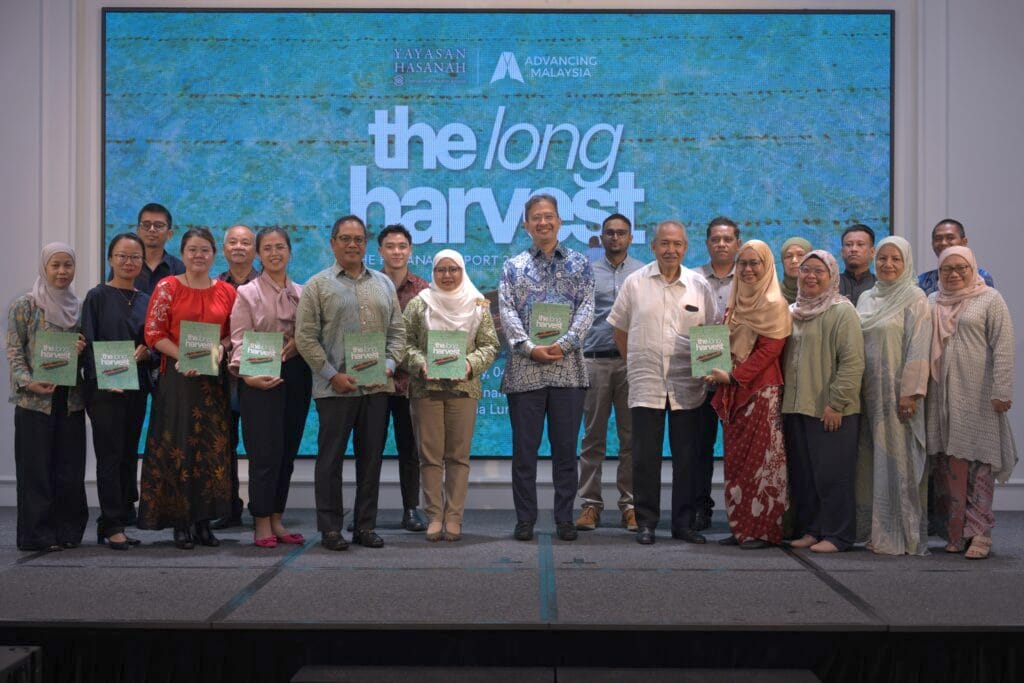
KUALA LUMPUR, 4 June 2026 – The Hasanah Report 2025 reflects on a decade of lessons from communities across Malaysia — and the conditions that help progress take root and endure. More than 1,100 projects later, Yayasan Hasanah has come to a simple conclusion: the real work goes beyond funding.
“What helps progress continue after a project begins?” This is the question that has increasingly shaped Hasanah’s work over the past decade.
Drawing on lessons from 1,134 projects nationwide, Yayasan Hasanah, the impact-based foundation of Khazanah Nasional Berhad, has come to a clear conclusion: funding can help start progress, but it rarely sustains it on its own.
What helps progress endure is often much less visible — trust, strong partnerships, local leadership and the ability to adapt to changing realities. These are the conditions that allow solutions to take root, grow, and create meaningful change over time. This reflection sits at the heart of The Hasanah Report 2025, launched today under the theme The Long Harvest.
Over the past decade, Yayasan Hasanah has worked alongside communities, civil society organisations, government agencies, academic institutions and private sector partners across Malaysia. Supported by funding from the Ministry of Finance (MOF), these collective efforts have reached more than 4.01 million people through 1,134 projects nationwide. In 2025 alone, Hasanah supported 172 new projects and welcomed 102 new partners.
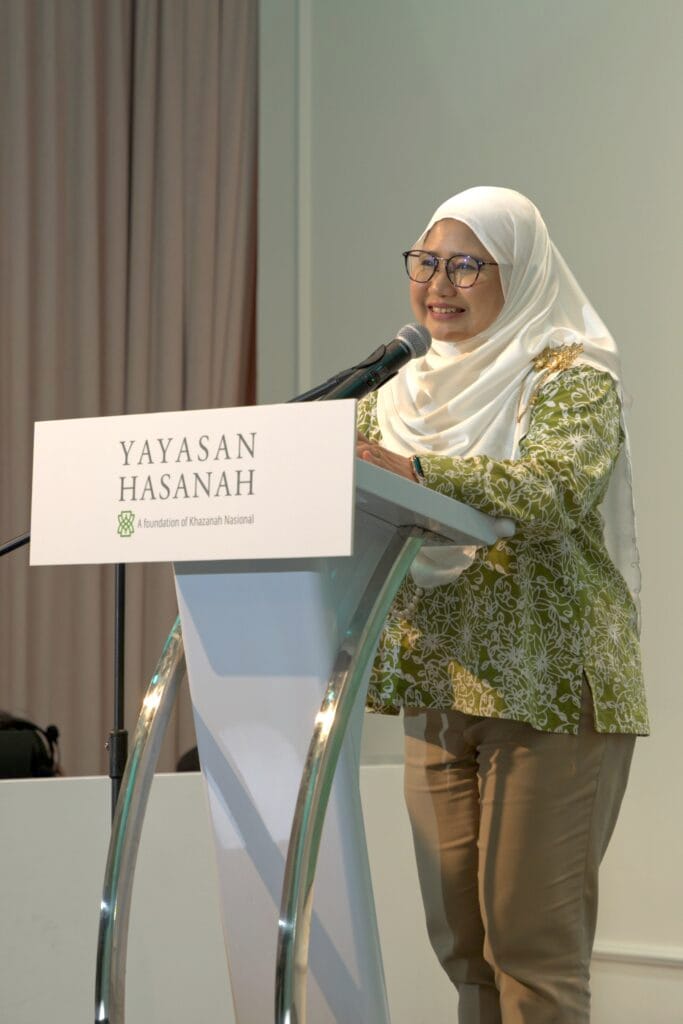
Speaking at the launch, Puan Siti Kamariah Ahmad Subki, Trustee & Managing Director of Yayasan Hasanah, said the organisation’s understanding of impact has evolved through years of working alongside communities and partners across the country.
“Early on, we focused on the support being provided — the projects launched, the programmes delivered, and the people reached. Those things remain important. But over time, we found ourselves asking a different question: what helps progress continue after a project begins?”
The report does not attempt to offer a single formula for change. Instead, it reflects on patterns that have emerged across more than a decade of working in different communities, sectors and regions throughout Malaysia.
Over time, some of the most meaningful signs of progress were not always the easiest to measure. Hasanah observed communities organising initiatives independently, local leaders stepping forward, and partnerships continuing long after a project’s formal timeline had ended. These moments often revealed as much about long-term progress as any project milestone or performance indicator — because they reflected growing confidence, stronger local leadership and communities taking a more active role in shaping their futures.
“Funding can help start something. But what helps it endure is often much less visible — trust, relationships, local leadership and the confidence people build over time,” said Puan Siti Kamariah.
“Those things rarely appear as a line item in a budget. Yet they are often what determine whether progress continues.”
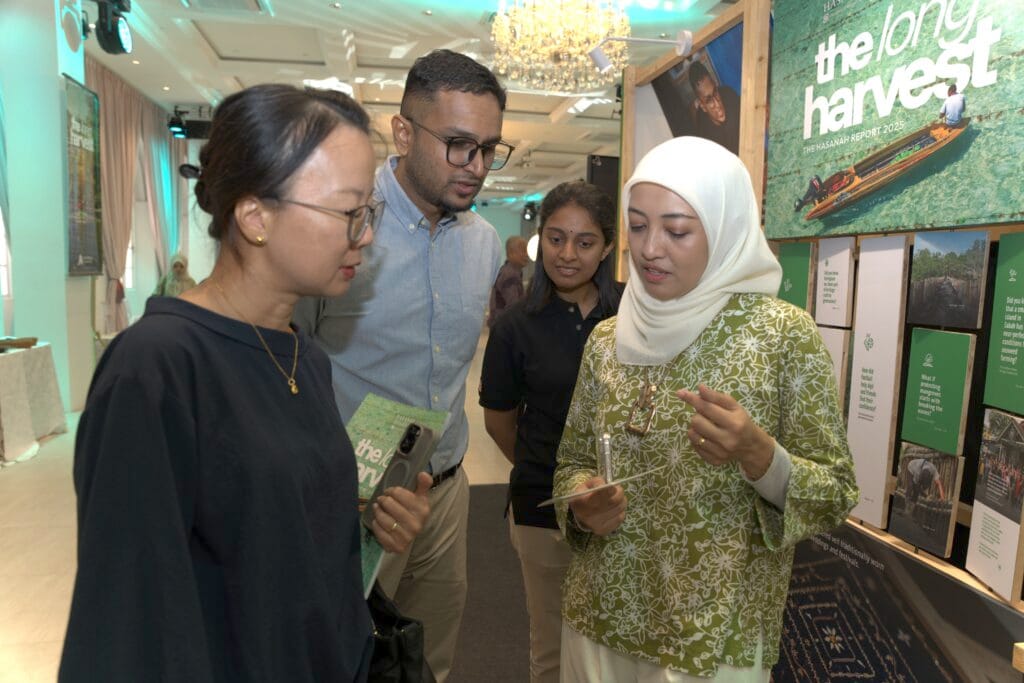
Revisiting the Omadal Island story, Yayasan Hasanah and partners reflected on the lessons, challenges, and progress from initiatives supporting undocumented communities on the island. The Hasanah Report 2025 is now available online, offering readers access to stories, data, and insights from communities across Malaysia.
(From left) Dr Nur Leena Wong, Aquaculture Scientist, Universiti Putra Malaysia (UPM), and Dr Shridev Nair Thamotheran, Project Manager, Malaysia Society for Harm Reduction (MSHR).
“The work is not just about supporting programmes. It is about creating the conditions for progress — building trust, learning alongside communities and partners, and shaping solutions together that can adapt and grow over time. Ultimately, success is not measured by how long communities rely on us, but by how confidently they are able to move forward on their own.”
The seven stories featured in this year’s report are not presented as proof points, but as windows into the realities, challenges and aspirations that have shaped Hasanah’s understanding of progress over the past decade.
They include efforts to restore coastal ecosystems in Perak, improve school engagement through football in Sabah, strengthen health, education and livelihoods on Pulau Omadal, and preserve cultural heritage while creating new pathways for rehabilitation and opportunity in Sarawak.
While each story is distinct, together they reflect a broader lesson from Hasanah’s first decade: meaningful progress is shaped not only by resources, but by the relationships, participation and partnerships that surround them.
Looking ahead, Hasanah will continue investing in programmes, partnerships and emerging ideas that strengthen the foundations for long-term progress. This includes remaining responsive to evolving realities facing communities across Malaysia — from changing livelihoods and environmental pressures, to the realities of an ageing population.
“As communities evolve, the way we support them must evolve too,” said Puan Siti Kamariah. “Over the years, we’ve learned that progress rarely follows a single blueprint. Our role is to stay curious, keep learning alongside communities and partners, and help create the conditions for good ideas to evolve and grow.”
The event was also graced by Tan Sri Johan Mahmood Merican, Secretary General of the Treasury, Ministry of Finance Malaysia, officiating the latest edition of The Hasanah Report. Alongside the report, Hasanah has released a collection of short documentary-style films featuring the individuals, communities and partners behind the stories.
From restoring mangroves along vulnerable coastlines to creating opportunities through education, culture and community leadership, the films offer a closer look at the people and places shaping change across Malaysia.
As communities and challenges continue to evolve, Hasanah hopes the report will contribute to a broader conversation about what it takes to create progress that lasts. Readers can explore the full report, watch the films and learn more at thr2025.yayasanhasanah.org.