
By Jillian Louis
Malaysia’s literary heritage is a treasure trove of untapped potential. From the timeless pantun and syair to the enduring legends of Puteri Gunung Ledang and Hang Tuah, our stories hold the power to captivate and inspire. Yet, as oral traditions fade and folklore slips away from public memory, we risk losing a vital part of our identity. At the same time, the rise of digital platforms has created an unprecedented opportunity to share and revive these narratives, bridging generational gaps and introducing traditional literature to a new audience.
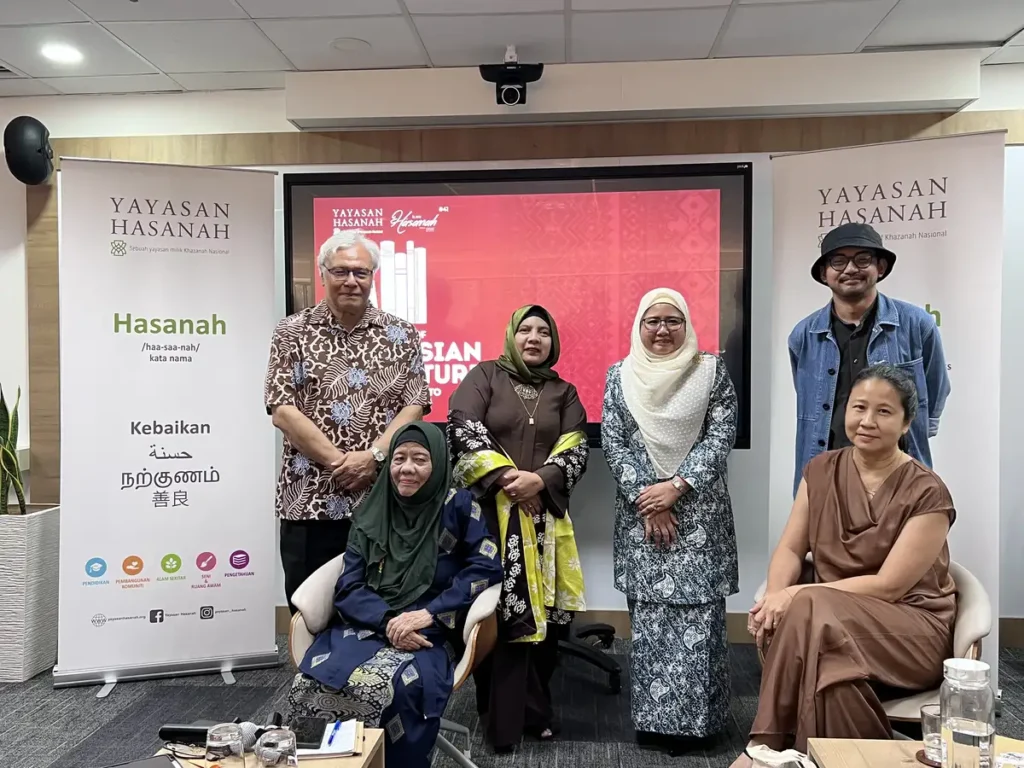
At Yayasan Hasanah’s 41st ILMU session, we heard from a panel of book lovers that delve into the topic of bringing traditional Malaysian literature to life through contemporary works. Moderated by the dynamic Puan Ninot Aziz, an award-winning author, writer, media specialist and storyteller of many generations, she hosted a panel with Datuk Dr. Zurinah Hassan, the 13th Malaysian National Literary and the first female literary person to be awarded the title; Shih-Li Kow, an award winning writer best known for her short story collections; and Nazir Harith Fadzilah, founder of Tintabudi, an independent bookstore in Kuala Lumpur.
Traditional Narratives in a Contemporary World
When Shih-Li was asked why she included the tale of the Acehnese princess in the opening chapter of The Sum of Our Follies, her answer was simple but profound. Although it played only a minor role in the story, she explained that it set the tone she was aiming for – capturing Malaysia’s inherent fabulism. Here, the fantastical is part of everyday life, blending tragedy, absurdity, and wonder in equal measure.
Yet, for many of us, folklore often feels distant and unfamiliar. Questions about the origins of these stories remain unresolved. Take the Acehnese princess, for example – a character some claim has Chinese roots, sparking debates over cultural ownership. These uncertainties are reflective of Malaysia and Southeast Asia’s complex histories, where thousands of years of cultural exchanges have shaped a uniquely rich narrative landscape.
Malay folklore itself draws from a tapestry of indigenous beliefs and external influences, shaped by Hindu-Buddhist traditions, Islamic teachings, and colonial histories. This blend mirrors the region’s role as a cultural crossroads, where trade routes brought not only goods but also ideas and stories. Traditional narratives remain deeply relevant in our lives today, even if we’re not fully aware, these tales form the backbone of cultural practices, family traditions, and the way we navigate shared experiences.
The Journey of Malaysian Creative Writers
“It takes 20 years to become an overnight success as a writer” – or at least that’s what it feels like for many writers in Malaysia. For Datuk Zurinah, the journey began in the 1950s. She was first introduced to beautiful words through songs of poetry. She recalled how her mother would sing to her when it was bedtime; buah kacang katuk, bilang satu-satu, tidur adik tidur, takut burung hantu or when she would play with her friends outside and they’d sing satu dua tiga empat, siapa dapat dia cepat. These lyrical moments made her so familiar with rhyming and pantun that she began writing her own verses. This early exposure also helped her grasp the use of symbolism, where nature becomes a reflection of emotion. Her connection to nature became the foundation of her poetic voice, eventually leading her to pursue a PhD exploring the role of nature in poetry. In today’s world, where many feel disconnected from the natural environment, her work resonates even more profoundly.
Datuk Zurinah’s success extends far beyond Malaysia, earning her recognition on an international stage. She attributes this, in part, to her own efforts in translating her works into English, making them accessible to foreign publishers. From there, her books were translated into Spanish, Russian, Japanese, and French. Similarly, Shih-Li Kow emphasises the importance of publishers who believe in a writer’s potential. She shared how a French publisher discovered her book at an international book fair and helped it reach new audiences. She also credits a French author based in Malaysia for bridging local writers with publishers in France – a key reason why Malaysian books are finding homes in French markets.
However, both writers agreed that greater support is needed from Malaysian agencies, particularly those receiving government funding. These agencies play a vital role in showcasing local books at international book fairs, highlighting the diversity of Malaysia’s contemporary works and offering a window into its unique traditional literature. With stronger backing, the world could discover even more of Malaysia’s rich literary heritage.
The Role of Digital Platforms and the Road Ahead
The digital age has transformed how we engage with stories. Visual media such as comics and animation now serve as gateways for younger generations to connect with traditional literature. Far from being a threat, digital platforms have revolutionised the sharing and consumption of literature, becoming fertile ground for creative expression. Young writers are using these platforms to publish short stories, poetry, and fresh reinterpretations of folklore. However, a generational divide persists – many older Malaysians remain unaware of the thriving literary communities online. By embracing digital platforms as integral to contemporary literature, we can bridge this gap and create a shared space for readers and writers of all ages.
During the discussion, Nazir highlighted the urgent need for more local literature to be produced, pointing to the wealth of opportunity in retelling folklore from fresh perspectives. He drew parallels to the Western literary canon, which has retold its foundational stories countless times, reinforcing cultural relevance and making their origins widely known. Similarly, retelling our folklore with new motifs and viewpoints can ensure the enduring relevance for traditional literature.
Libraries also play a critical role in connecting communities with literature, especially when outreach begins in early childhood. Programmes where librarians engage directly with children in kindergartens are vital to nurturing a love for reading from a young age. Beyond this, the quality of writing – whether for books, movies, or children’s stories – must be prioritised. A thriving and creative society begins with a commitment to strong storytelling, underpinned by a clear and meaningful national initiative to strengthen and conserve our identity by championing Malaysian arts, heritage, and culture.