
Malaysia’s Accelerating Ageing Population
Malaysia is rapidly becoming an ageing nation with 7.3% of its population aged 65 and above – a figure projected to triple to 20% by 2040 – becoming an aged nation where 1 in 5 Malaysians are seniors. The accelerated rate of the ageing population brings great challenges as 40% of seniors currently live with chronic illnesses and our palliative care operations only reach about 4% of those in need. In addition, Malaysia’s ratio of geriatricians to elderly patients remains critically low at approximately 1 per 10,000 seniors. Equally concerning, one in three elderly Malaysians reports isolation, a risk factor linked to cognitive decline and higher mortality rates. Addressing these issues requires reimagining care models, bridging accessibility gaps, and fostering social collaboration.
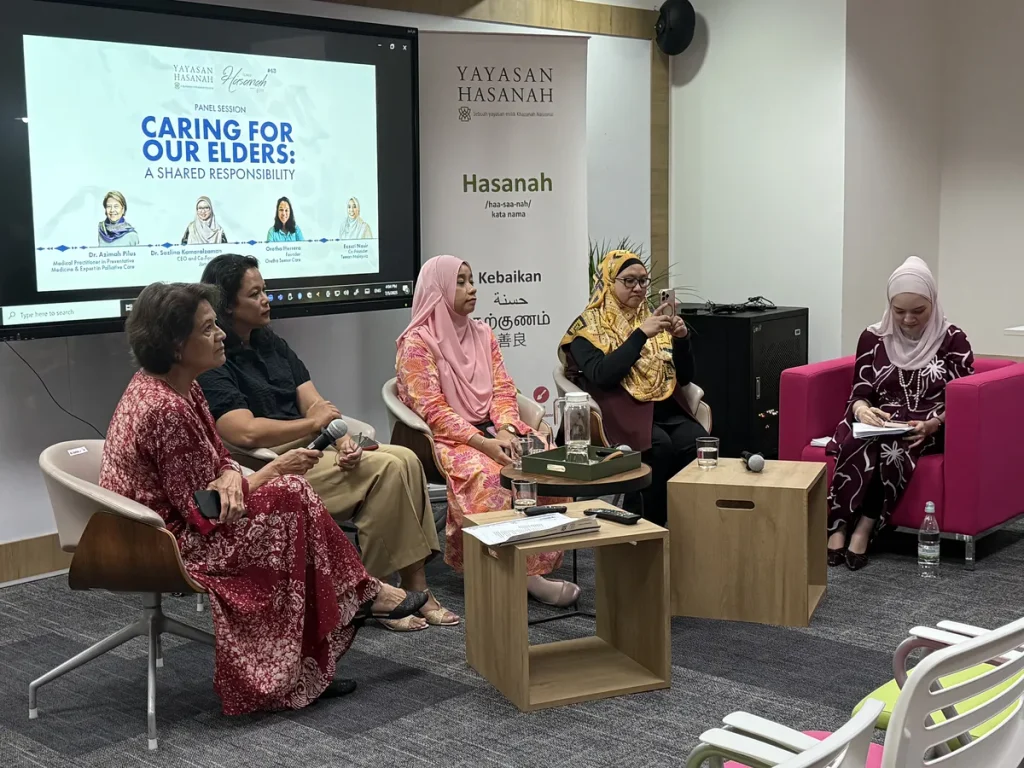
At Yayasan Hasanah’s 43rd ILMU forum titled Caring for Our Elders: A Shared Responsibility, four pioneers in elderly care convened to address these gaps through policy, innovation, and community action. The experts presented targeted solutions for Malaysia’s ageing population, each addressing critical gaps in the senior care ecosystem. Dr. Azimah Pilus, a preventive medicine and palliative care specialist, redefined palliative care as essential post-recovery support, demonstrating how trained caregivers could enhance quality of life while reducing dependence on specialists. Building on this foundation of community-based care, Dr. Sazlina Kamaralzaman’s innovative transport initiative Jom Makcik empowers women drivers to deliver both mobility solutions and meaningful companionship, directly combating senior isolation.
The discussion expanded to holistic care models, including Oretha Herrera’s home-based concierge services and daycare programmes through Oretha Senior Care, as well as Ezzati Nasir’s Teman initiative, which provides dementia-friendly communities and volunteer companionship programmes. Together, these diverse approaches create an integrated framework addressing seniors’ physical, social and emotional needs – underscoring that comprehensive elder care extends far beyond medical interventions alone.
Bridging the Mobility Gap
Transportation barriers and technology gaps disproportionately exclude seniors from essential services. A 2023 survey found that 68% of Malaysian seniors avoid medical appointments due to lack of transport, while 52% struggle with digital health platforms. While apps and cashless payments dominate modern services, many elderly struggle with these changes. For example, insisting on cashless-only payments at care centres could unintentionally exclude those who rely on cash. Mobility solutions tailored to seniors – such as wheelchair-accessible vehicles and culturally sensitive services employing female drivers like Jom Makcik – can simultaneously address isolation and unemployment. Japan’s hybrid approach offers a blueprint, balancing technological advancement with accessible alternatives for their seniors. By maintaining cash payment options alongside digital systems, Malaysia too, could ensure no senior is excluded from critical services, fostering inclusivity in its digital transformation.
Home-Based Care Innovations
These insights reveal a powerful statement: non-medical support is just as vital as clinical care in helping seniors maintain independence and dignity. The growing demand for dementia care in Malaysia could be addressed by caregivers through training programmes that would equip communities to identify early health complications, symptoms of dementia and prevent costly hospital readmissions. Volunteer companionship programmes, such as those organised by Teman Malaysia, where youth are paired with seniors, have reduced self-reported loneliness by 40% in pilot projects.
Systemic gaps continue to persist, where many seniors are discharged without care plans or dietary guidance, leaving families or the seniors themselves to navigate complex needs alone – which is how Oretha Senior Care came about. Strengthening partnerships between healthcare providers and community networks could mitigate these challenges, ensuring continuity of care and reducing familial strain and building a community-driven ecosystem where seniors, families, and caregivers collectively shape a future where ageing doesn’t mean losing autonomy.
Rethinking Palliative Care
Palliative care is often perceived as end-of-life support, but it is far from that. Experts argue that it functions as a lifeline for post-recovery quality of life, particularly for seniors managing chronic conditions. Community-driven models in New York illustrate the potential of training non-specialist caregivers, which reduced hospital readmissions by 25% and saved billions in healthcare costs over five years. In Malaysia, where only 20,000 of 200,000 patients needing palliative care receive support, this approach has the potential to significantly alleviate pressure on hospitals and clinics. Key priorities should include certifying family caregivers and integrating pain management training into community health programmes, ensuring that patients are informed and treated appropriately for their condition, resulting in a healthier, more active, and connected senior community. This approach also addresses the loss of income, stability and personal freedom that families face when they have to stay home to care for their elderly.
Towards a Collaborative Future
Addressing Malaysia’s ageing wave requires a shift in how seniors are perceived and supported. Policy reforms must recognise and subsidise caregivers, acknowledging their role as pillars of the healthcare ecosystem. At the same time, community-driven innovations – from intergenerational mentorship programmes to neighborhood resource directories – can bridge gaps in medical and non-medical care. These efforts would in effect contribute to a culture of support and inclusivity where compassion grows as naturally as our grey hairs. After all, how we care for our elders today defines the dignity we’ll all inherit tomorrow.